Archive Metal casting | archaeometallurgy
Jan 26 2026

Bronze doors: Medieval Monumental Casting between Technology and Workshop Practice
Bastian Asmus
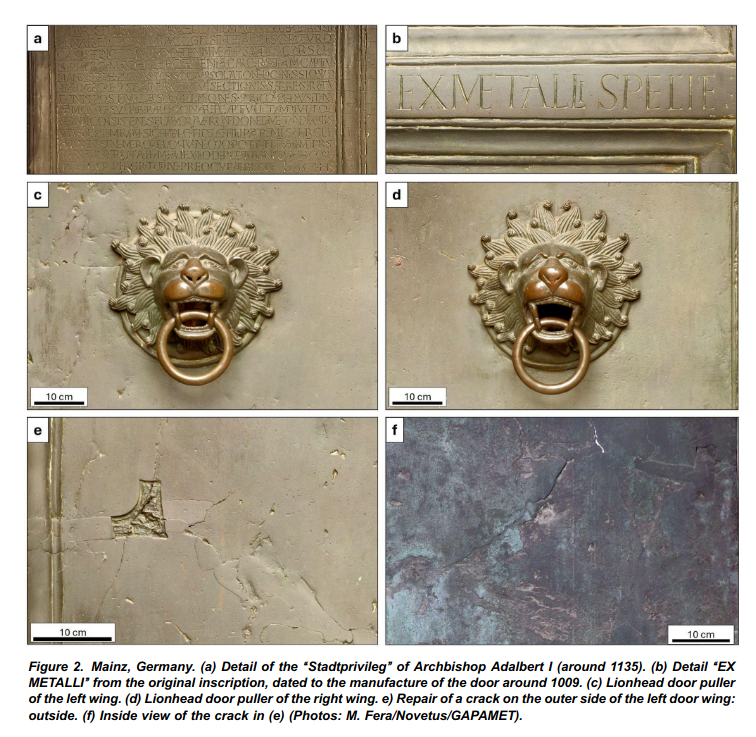
Detailed images of the Mainz bronze doorsP pullers, parts of the inscription as well as of casting fault repairs.

Monumental bronze doors of the High Middle Ages are most often discussed from an art-historical perspective. Their technical dimension has received far less systematic attention. Two closely related studies address this gap by examining the large bronze doors of Hildesheim, Mainz, and Augsburg from a materials-scientific and casting-technical point of view.

The first study takes a comparative approach to all three bronze doors (Mödlinger et al 2026). Based on alloy analyses and casting-related questions, it discusses material choice, casting strategy, and practical feasibility. The results show that the bronze doors are neither technically uniform nor best understood as isolated exceptional works. Instead, each reflects specific decisions, constraints, and priorities within its casting context.

The second study focuses on the Hildesheim bronze doors and places greater emphasis on process-oriented interpretation (Cziegler et al 2025). Casting simulations are used to explore thermal behaviour, solidification sequences, and potential risk zones during the pour. These models do not replace historical evidence. They help distinguish technically plausible scenarios from unlikely ones and allow discussion of possible workshop practices.

Medieval bronze bronze doors: Methodological approach

The methodological approach is central to both studies. The aim is not to describe medieval casting processes as if they were directly observed, nor to project modern metallurgical concepts back onto the Middle Ages. Instead, the focus lies on identifying the technical concepts, experiential knowledge, and problem-solving strategies that could realistically have been available at the time.

The analysis proceeds deliberately from a chronological bottom-up perspective. This is not meant in a hierarchical sense, but as an attempt to understand how casting practice developed through material constraints, process limitations, and workshop routines. The resulting interpretations are therefore necessarily plausible rather than definitive. They are intended to narrow the range of interpretation, not to close it.

Collaboration with Gates of Paradise Project

Both papers were developed in the context of a close collaboration with the GAPAMET project (Gates to Paradise), which focuses on the interdisciplinary study of medieval bronze bronze doors. Over the past two years, our laboratory has worked closely with the team led by Marianne Mödlinger, the project’s principal investigator. This collaboration provided the framework for many of the materials-science and casting-related questions addressed in these studies.

More information on the project:
https://www.gapamet.imareal.sbg.ac.at/en/

A related post from this collaborative context,  led to a separate paper (Asmus et al 2025) on specific workshop practices and means of replicating (wax) models.

Articles

The articles are available here:
https://doi.org/10.1007/s40962-025-01857-4
https://doi.org/10.1007/s40962-025-01820-3

References

Asmus, Bastian, Martin Fera, and Marianne Mödlinger. 2025 ‘Deconstructing Barisanus’ Medieval Casting Technology Based on Digital Twins’. Scientific Reports 15, no. 1 (3 March 2025): 7419. doi:10.1038/s41598-025-91168-9.
 
Cziegler, Andreas, Bastian Asmus, Martin Fera, and Marianne Mödlinger. 2025‘Casting Mediaeval Monumental Bronzes: The 11th Century Door from Hildesheim, Germany’. International Journal of Metalcasting, 27 December 2025. doi:10.1007/s40962-025-01820-3.
 
Mödlinger, Marianne, Bastian Asmus, Martin Fera, Juditz Utz, and Giorgia Ghiara. 2026  ‘Casting Monumental Bronzes in Central Europe in the High Middle Ages: The Doors of Hildesheim, Mainz, and Augsburg’. International Journal of Metalcasting, 25 January 2026. doi:10.1007/s40962-025-01857-4.


Jan 20 2018

Handgonne breech loader, cast bronze Part I

Bastian Asmus

In this series of articles I will find out how to make a particular handgonne, and in extension, very early firearms in general; or rather how they could have been manufactured with the contemporary technology. I am not much for guns’n shooting, but I have always been intrigued by the casting process of guns and cannon.
Why? Because, as a fully trained bronze founder I know that there are a lot of challenges involved and even a lot of room for failure. As a professional maker of things, failures are among the least favourite topics to talk about. However, also being a scientist helps to overcome this predicament: Without failure there can be no progress. Or in other words we should not content ourselves with our hypotheses, but should constantly try to falsify them.


Early breech loaded handgonne.

This image of a supposedly 15th century handgonne shows a very early breech loading system, that did not take hold for centuries to come. Technical limitations in the manufacturing process, may well be responsible for this. It could simply not be manufactured as easily as the much more common muzzle loaders. Source: Viking Swords Forum thread 7364.

Continue reading


Nov 14 2017

Non-ferrous sheet metal

Bastian Asmus

Non-ferrous sheet metal: red brass, 0,35 mm

Non- ferrous sheet metal: Custom made historic red brass alloy,

Non-ferrous sheet metal

Who is not familiar with this, you want to make an object from non-ferrous metal sheet of a certain alloy, e. g. a helmet of the Urnfield period. But try as you might no sheet metal of the desired alloy can be obtained in the industry. The industry is simply not interested in supplying small and micro-enterprises or cultural science research projects. But that is no longer the case, as the Archaeometallurgy Laboratory has acquired a medium-sized rolling stand, where sheets up to a maximum theoretical size of 500 mm width can be rolled, though in reality a width of 450 mm is more likely to succeed. This is done in a purely hand-crafted process and thus comes close to the requirements of archaeometallurgical research.

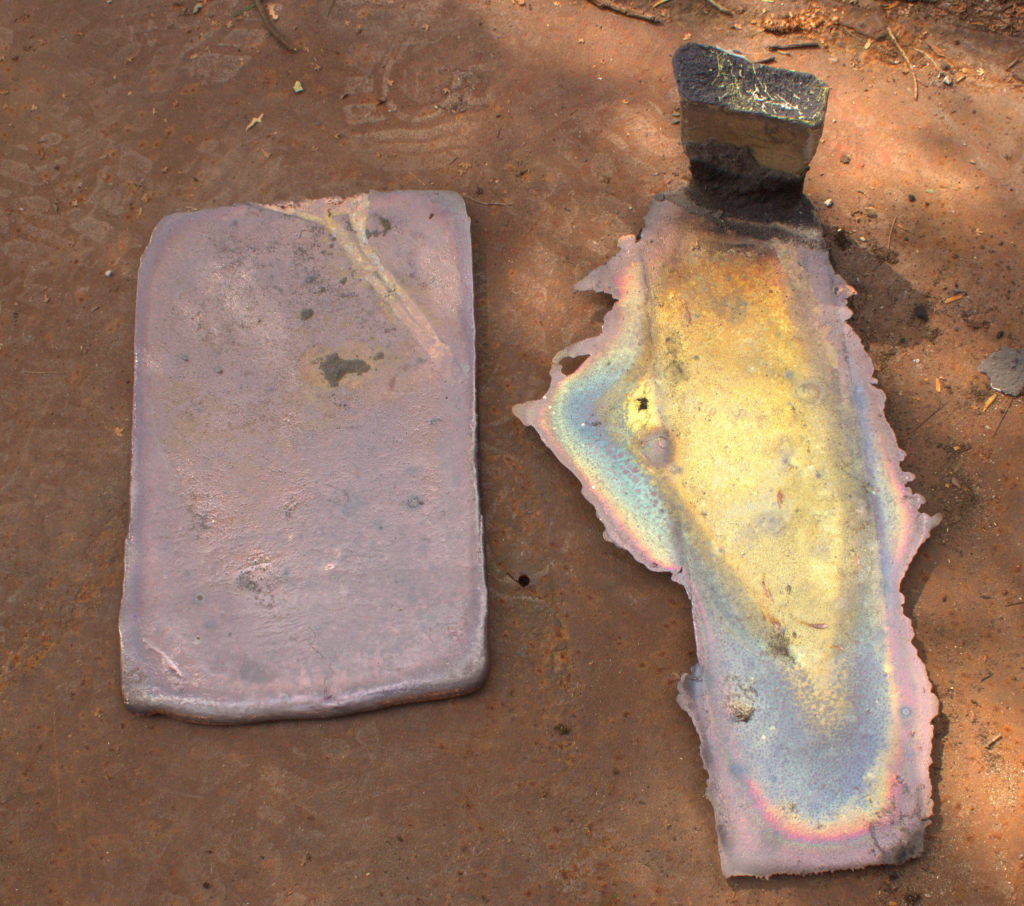
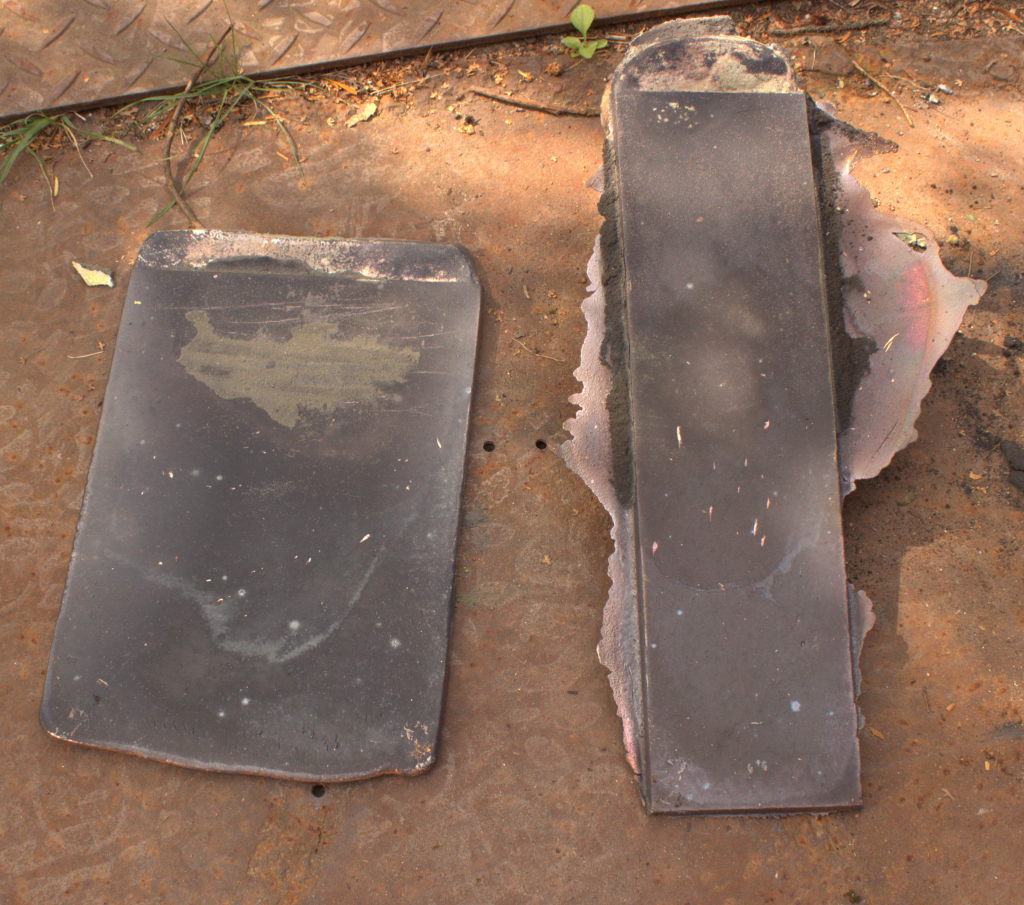
Red brass slabs for sheet metal makingCast red brass slabs, ready for heat treatment

The Laboratory for Archaeometallurgy deals with the reconstruction of past production techniques, i. e. the rolling of non-ferrous metals. For about a year now, the laboratory has been working on the production of sheet metal for the production of brass instruments, producing historical sheet metal alloys, casting them into slabs and processing them into sheet metal.

To this end, we have acquired a larger duo rolling stand with which we can manufacture sheet metal in special alloys by hand, which are no longer commercially available. This is of particular interest for the manufacture of instruments as well as for the production of countless archaeological and prehistoric metal sheet finds such as belts, situles, armour, helmets or shields. We are excites about this, because now we are no longer bound to the small selection of bronze sheets that are commercially available and yet already difficult to obtain.  For the reconstruction of prehistoric and historic objects we can now produce the sheet metal that is required!.

The short film provides a glimpse of the trials and errors that are necessary when making historic non-ferrous sheet metal. By far not every metal alloy behaves in the same manner, some do not like being cast, some do not like being cold rolled. Others yet can only be rolled hot or have to be worked first with a hammer. It is an ongoing enterprise to make historic and prehistoric sheet metal, and a fascinating one, too. Turning a cast object into malleable sheet metal is something that a bronze founder does not do every day. In all cases the slabs and sheet metal to be has to undergo repeated heat treatment in order to produce good quality sheet metal. A process that is monitored by our lab by means of metallography…